Threads 131: The spirit of the grain
Featuring guest contributor Bozena Hrycyna
I started making things out of straw about 15 years ago, namely "pavuky", the Ukrainian geometric straw mobiles (known more commonly as "himmeli"- the Finnish term for them). I was intrigued by this craft, new to me, and when I learned to make them, I just fell in love. I started off making very basic ones, and didn't have much access to wheat or rye stalks, so I experimented with various wild grasses and eventually started growing some rye. Pavuky are prepared using rye, and hung in the house as a decoration and talisman for the winter holiday season.
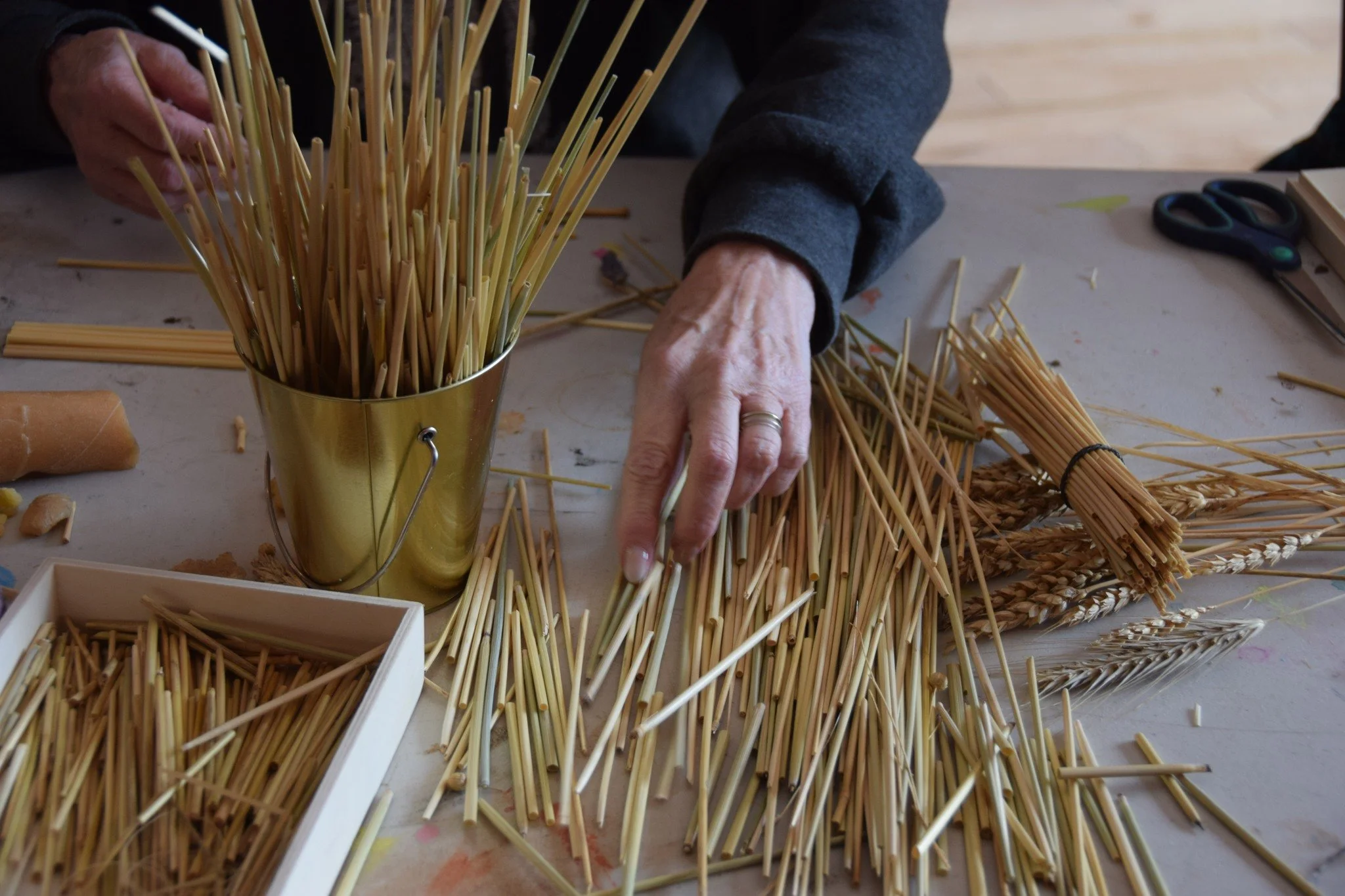
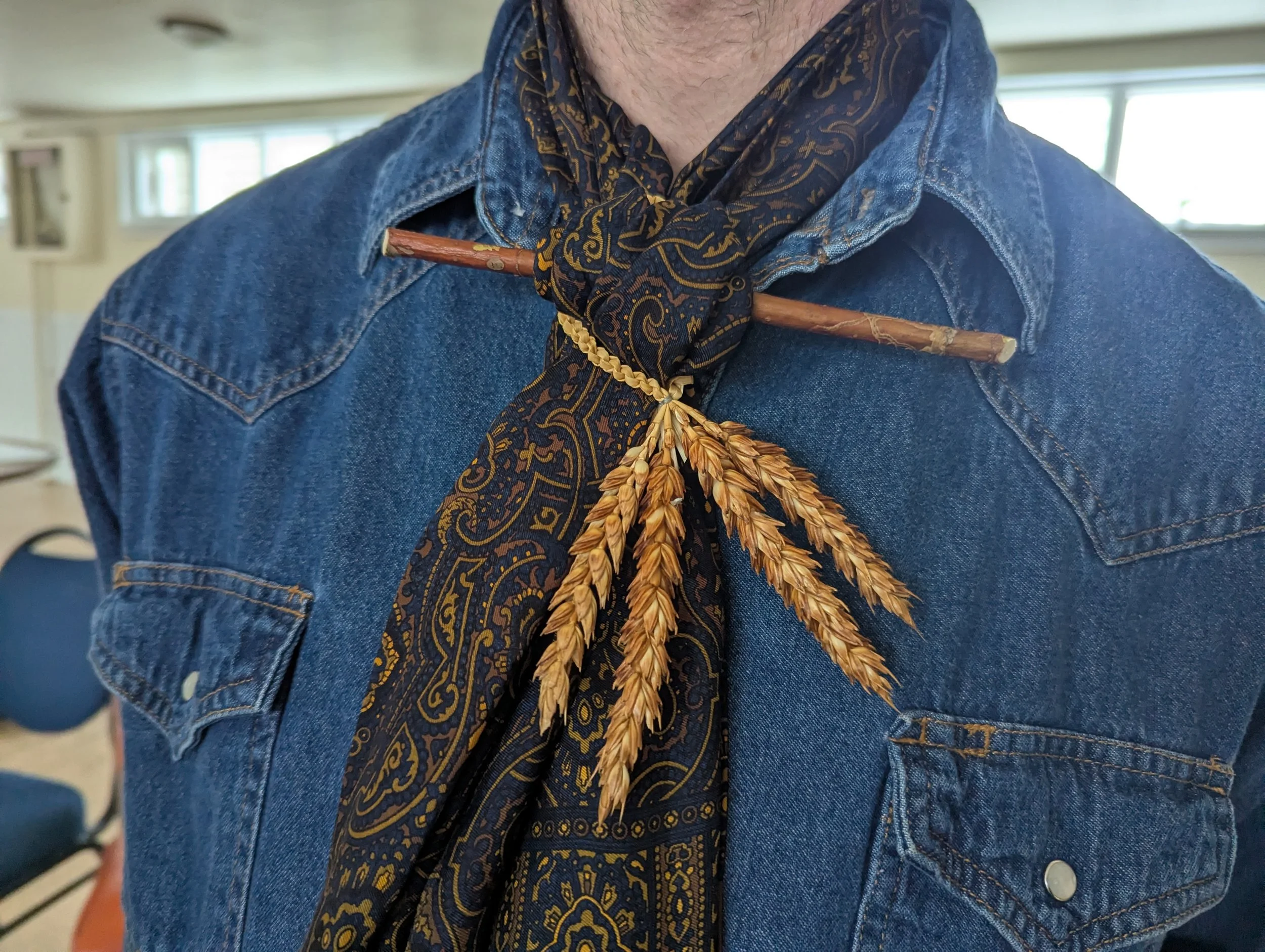
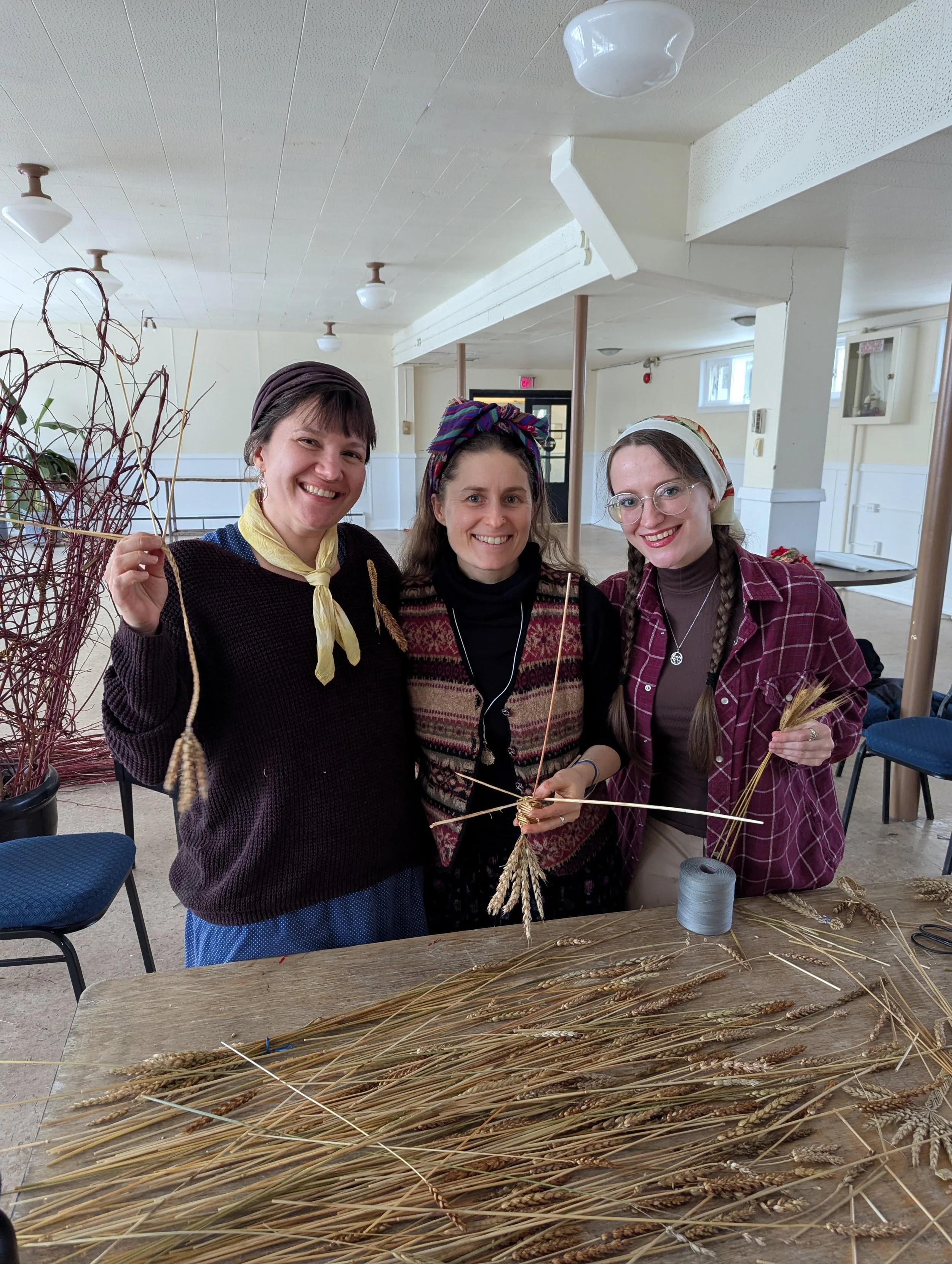
I didn't know of them growing up; it was a village tradition that wasn't known too much in the cities back then. But my family always had a sheaf of wheat in the house which we brought out at Christmas time-- which is a very important Ukrainian custom of honouring the ancestors, and still survives to this day in urban life, even in diaspora (maybe even more so in diaspora ;). We didn't grow the grain, we simply saved the one sheaf we had from year to year. Around the same time that I learned to make pavuky, I also learned about more elaborate ways to tie together the sheaf, which in Ukrainian is called a "didukh" (literally "grandfather spirit"). The didukh was made by wrapping smaller bunches of grains and bringing them all together, and then wrapping them in a big bundle that could stand, sometimes even giving it legs. I learned that in many places, it was customary to burn the didukh at the end of the holiday season, to release the spirits in the grain back to the spirit world. I made a pavuk each year and burned it at the end of our new year's party. I also made many pavuky with friends and hung them in our communal house. We kept passing on the craft to anyone who came by and had the patience to sit and make them! For many years this was the extent of my relationship with straw craft.
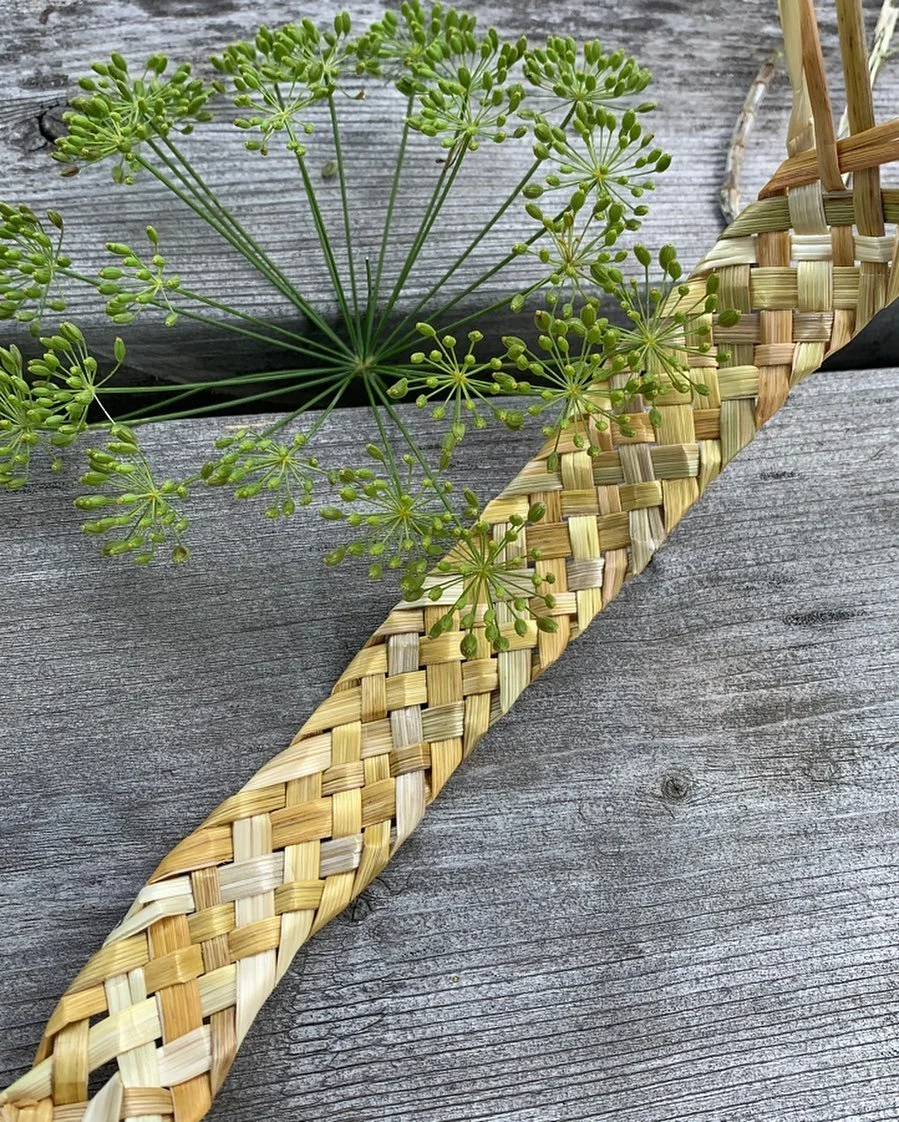
Bozena’s first straw plaiting ever!
However, many different things kept conspiring to make me fall deeper in love with working with grains and straw.
A key moment was at our first Ontario scything gathering "Meet Me in the Meadow"on Amherst Island, when someone showed me a simple plait made with rye. I had never done a straw plait before; they put the fresh rye in my hands and got me started and I made a tiny thing-- I was absolutely smitten!
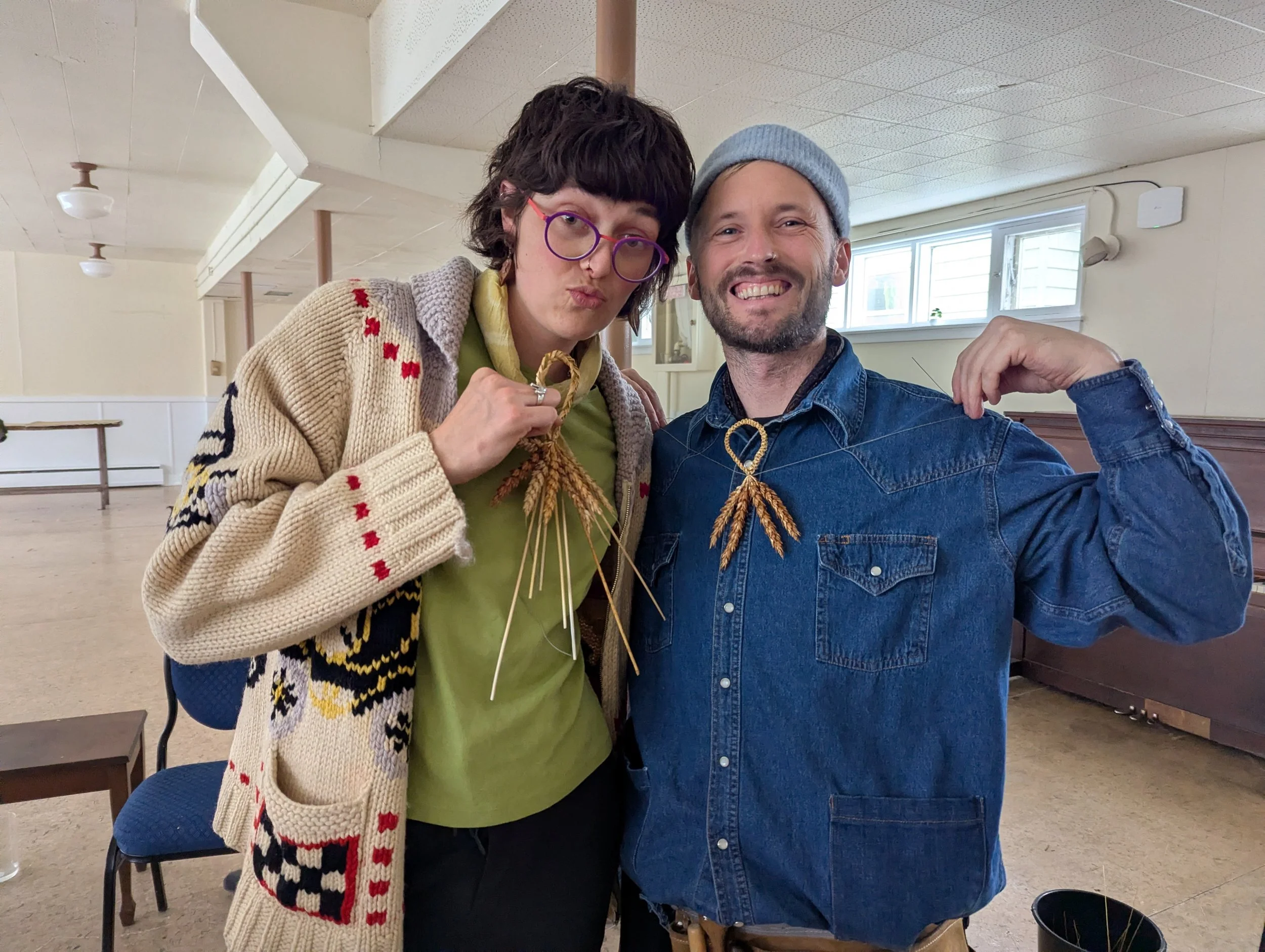
I started to look up straw plaiting techniques and learned to make simple "corn dollies" , including farmers favours or love knots, from Scotland and across the British Isles. I loved making these small pieces with their satisfying stretchy plaiting and beautiful displays of the wheat ears. As I delved deeper into this craft I learned that the term corn dolly refers to the sheaf that was specially set aside from the harvest, representing the spirit of the grain ("corn" is the old English word for wheat/rye or any cereal grain). It was often tied into a figure, much like the "didukh" in Ukraine and Eastern Europe. Over the years, and in different regions, the figures took on many different forms, often little elaborately plaited shapes, more akin to adornments. All the diverse types of straw plaited pieces that were made at harvest time to honour and celebrate the harvest came to be known as corn dollies, each with a regional place name of origin. But this tradition extends far beyond Great Britain, and even Europe. Straw plaited talismans and "corn dollies" have been made absolutely everywhere that grain has been grown since cultivation began in ancient Mesopotamia! While I was researching different corn dollies and harvest tokens I suddenly remembered a piece I had seen in the Museum of Natural History in New York City many years ago- it was a harvest house blessing talisman made in ancient Egypt (a "straw cage" also known as "Arabic cage"), with the exact same function as a "corn dolly" or "didukh". These are still being made in the Mediterranean region and around the world. I also thought of the Shinto knots (door decorations/talismans made of straw fibre) I had seen in the Mingei Museum (of Folk Art) in San Diego...which are hung on the door at New Year's (called "shimenawa") and represent a threshold between the everyday world and the sacred world..
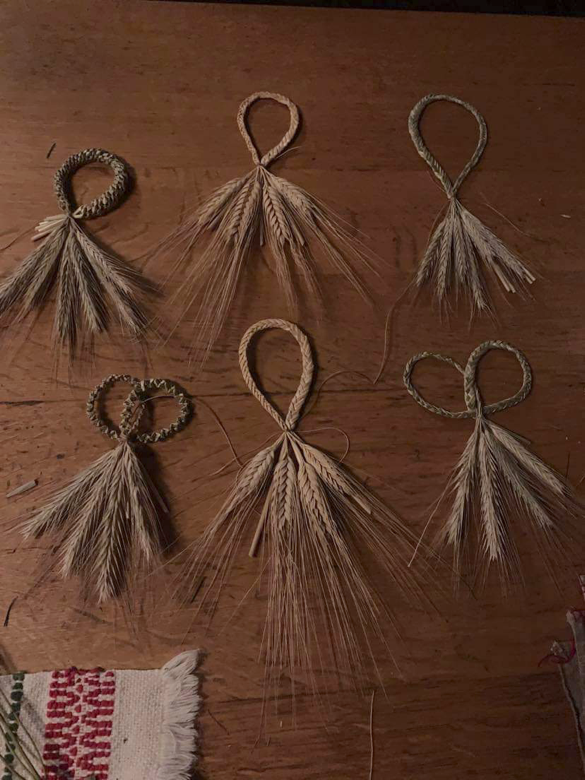
Egham harvest tokens
I love how much this craft is part of everyone's cultural lineage and can connect us all to the harvest, our ancestors, and the land.
I've enjoyed featuring the various heritage wheat and rye varieties in my corn dollies, and am constantly taking inspiration from these ancestral traditions that live on in "the spirit of the grain". Making corn dollies can be an entry into the vast world of straw craft, and the type of harvest tokens and farmers favours from England that I make are an excellent way to learn some basic plaiting techniques.
In the workshop I'll be leading at the Lanark Highlands Basketry Museum, we'll be making corn dollies in the style of "Egham Harvest Tokens" from England, and learning a variety of plaiting techniques that can be adapted to different projects. I can't wait to share a taste of this vast tradition with you!
Working with straw is so joyful! Come join me for the Harvest Corn Dollies workshop here
Friday, October 23, 2026 | 6 pm - 8 pm | MERA Schoolhouse
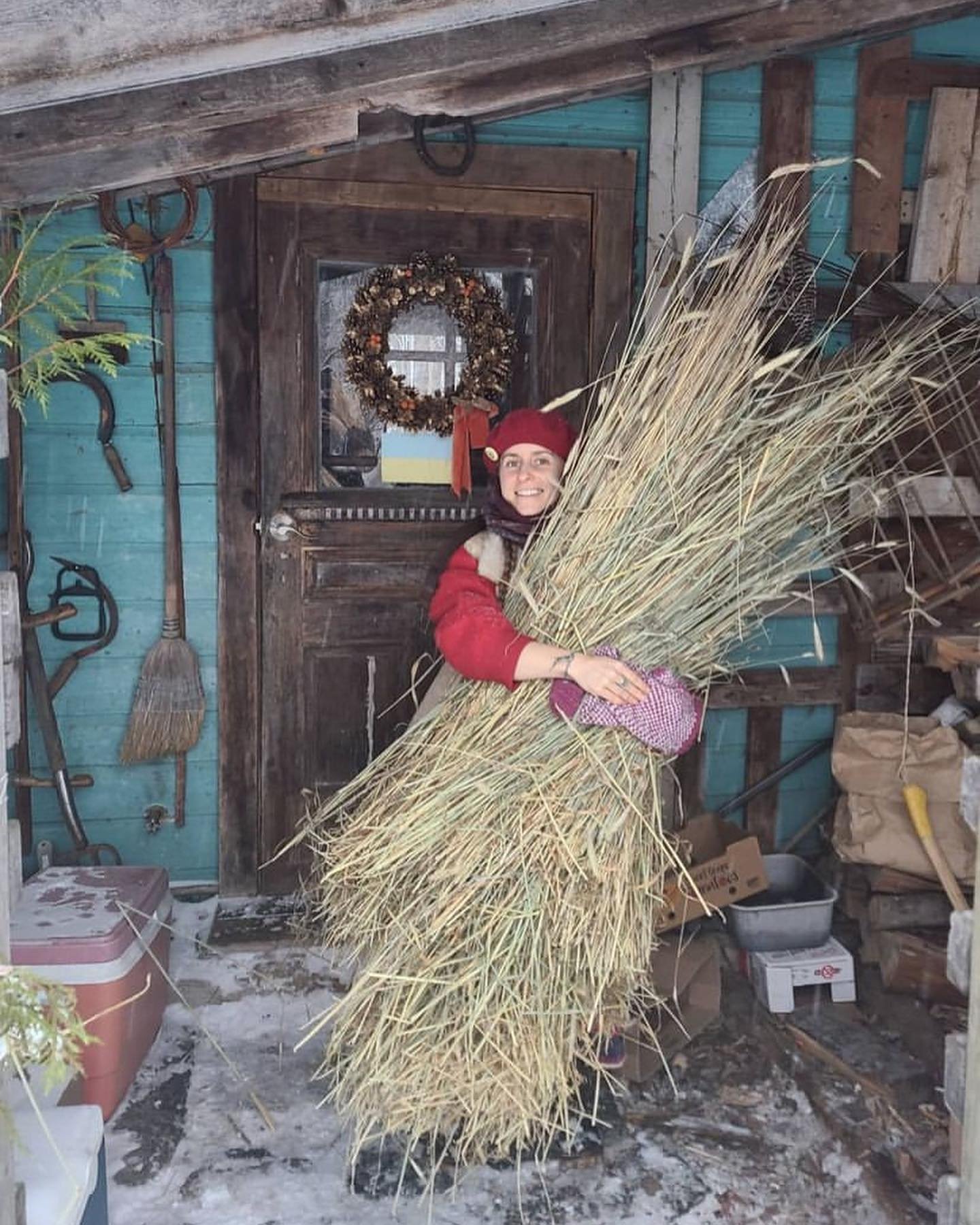
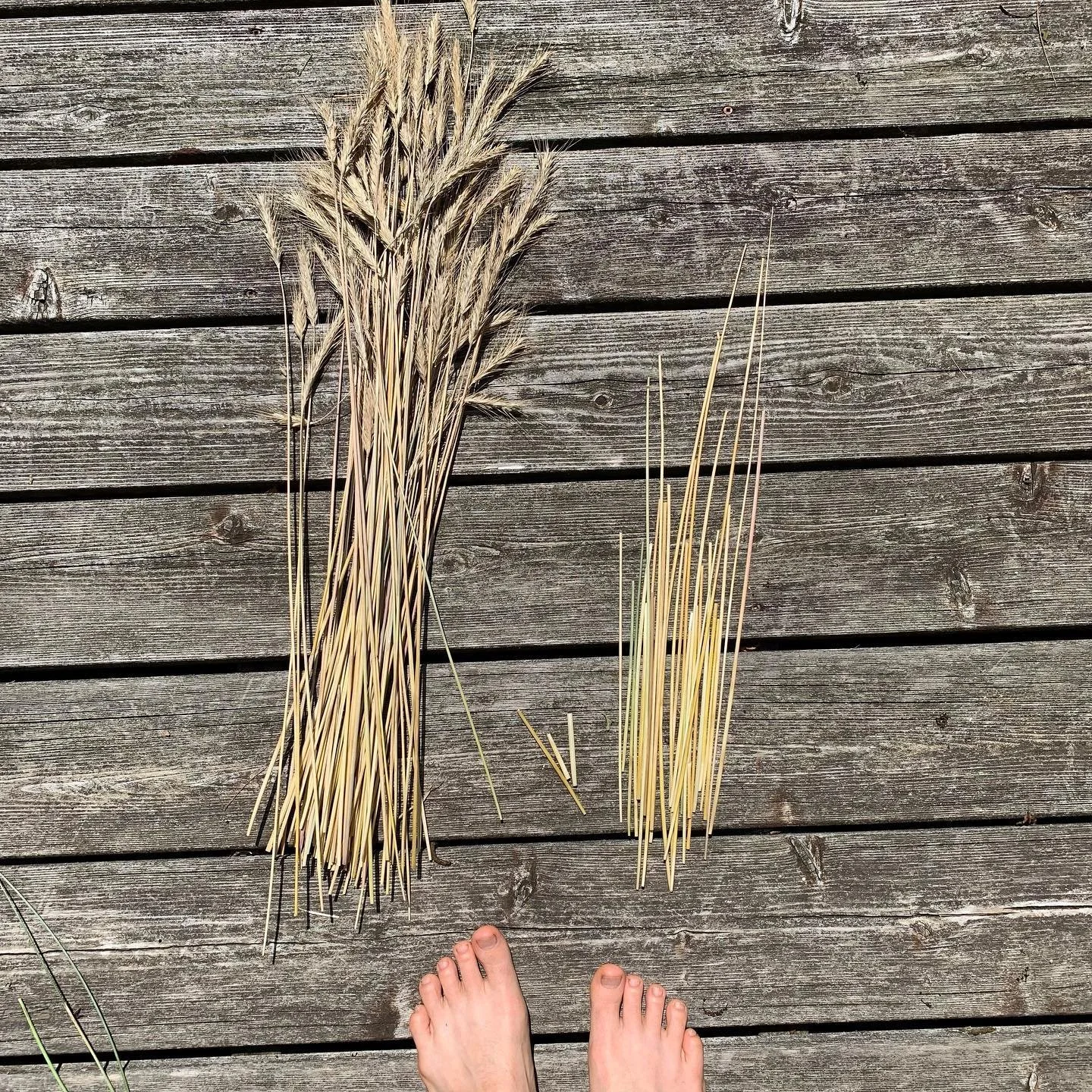
Bringing in rye straw from the summer stored in the barns:
Bozena Hrycyna is director of FOLK CAMP, an organisation connecting people with the folk arts, crafts, music, and land based traditions of Eastern Europe in the Canadian context. As co-founder of the Kosa Kolektiv, Bozena has collaborated with many talented and skilled artists, musicians, and community organisations in Ontario (and across Canada) to promote the richness of Ukrainian and Eastern European cultures, and to facilitate meaningful connections for people (cross-culturally and within their own lineage). Bozena is an amateur singer of traditional village songs, embroiderer, pysanka maker, weaver of threads and grasses, and textile craftsperson… actively learning and sharing these artforms from her Ukrainian/Ruthenian heritage. She has taken workshops and travelled extensively in pursuit of deeper understandings of these and other folkways, and apprenticed to the land, spending the last six years on a homestead near Wilno, Ontario. She currently divides her time between the Ottawa Valley, and southern Ontario.